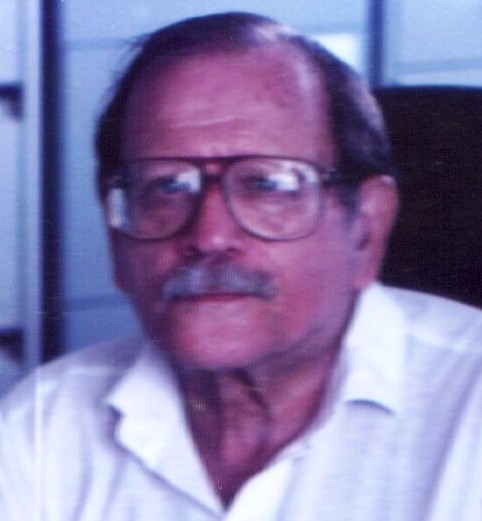
OBITUARY
Remarkable US Journalist Dies in Havana
by Pedro Martínez Pirez
June 29. 2019
A CubaNews translation. Edited by Walter Lippmann.
Journalist Lionel Martin, correspondent in Cuba for numerous news organizations from the United States and other Western countries, died in Havana on Friday night at the age of ninety-two.
His body was cremated this Saturday.
Martin covered the events of the Cuban Revolution in an exemplary way and spread them through telegraphic, radio and television channels of his country and other Western nations.
Lionel Martin also worked for a period in the Latin American News Agency Prensa Latina, based in Havana.
His death caused deep sorrow in the Cuban media and among the foreign press accredited in Cuba.
Lionel Martin will always be remembered for his informative honesty and his attachment to the truth of the facts.
FALLECE EN LA HABANA NOTABLE PERIODISTA ESTADOUNIDENSE
por Pedro Martínez Pirez
Junio 29. 2019
El periodista Lionel Martin, corresponsal en Cuba de numerosas entidades informativas de Estados Unidos y otros paises occidentales, falleciò en La Habana en la noche del viernes a los noventa y dos años de edad.
Su cadàver fue incinerado este sàbado.
Martin cubriò ejemplarmente los acontecimientos de la Revoluciòn Cubana y los divulgò a travès de cadenas telegraficas, radiales y televisivas de su paìs y otras naciones occidentales.
Lionel Martin tambièn laborò durante un perìodo en la Agencia Informativa Latinoamericana Prensa Latina, con sede en La Habana.
Su deceso causò hondo pesar en los medios informativos cubanos y entre la prensa extranjera acreditada en Cuba.
Lionel Martin serà recordado siempre por su honestidad informativa y su apego a la verdad de los hechos.
Testimonials
The following are comments, anecdotes and memories written by Lionel’s family members, friends, colleagues and acquaintances. These testimonials are in the language in which they were originally written (English or Spanish).
It was April 1st, 1988, which happened to be our 16th wedding anniversary. As Head of the Reuters News Agency in Havana, Lionel was invited to a reception for the visiting president of Zimbabwe. As Lionel’s wife, I accompanied him. We did not go through the reception line, but went directly into the hall with beautifully decorated tables laden with food for the guests. We made our way to a corner of the room to wait for the appearance of Fidel and the African leader. Suddenly, we saw them enter through the door on the opposite side of the room. Fidel stopped a moment and swept the rom with his eyes, and then, to my surprise, I realized he was heading directly to us. He stopped right in front of Lionel, turned to his guest and said, “Senor Presidente, I would like you to meet an honest American journalist.’ Adrienne Hunter, Wife
I remember Lionel always concerned about the eating habits of Cubans. He would tell friends and acquaintances about the importance of eating more vegetables and healthier meals. He enjoyed having people for lunch or dinner and would often cook for them. Lionel was a very creative person who enjoyed experimenting and innovating. He applied these talents to his cooking and produced many interesting dishes. Some were big successes, others… not so much. During the Special Period (1991-1994) after the collapse of the USSR and the loss of Cuba’s main trading partners there was a great shortage of food in the country. Most people had trouble putting food on the table and what they managed to serve was not always very nourishing. Lionel worried about this and would always try to provide food to people he knew. Whoever visited his place would be offered a snack or be invited to have lunch or dinner. Trying to find alternatives to the scarce food items available, he researched options and even sought advice from a diplomatic attaché at the embassy of India. He investigated what nature provided for free… namely grass. He chose ‘bledo’ (pigweed) that grew wild everywhere, made sure there was nothing harmful in it and found out what vitamins it contained. Lionel made bledo bread and bledo cookies, but his star creation was ‘frituras de bledo’ (pigweed fritters), because Cubans enjoy fried things very much. He was very enthusiastic about these products and wanted all friends and acquaintances to taste them. I remember being offered both the bread and the fritters. They were a nice effort, but just tasted like grass. Of course, I did not tell him that. Instead I praised the result. How could anyone disappoint the generous Lionel, a man who was trying to find a solution to the world’s famine problem!! Madeleine Monte. Friend
El abuelo Lionel is one of the most important persons in my life. I always remember how much I loved visiting with him…everyday was an adventure! We would cook waffles for breakfast, experiment on his computer, visit his friends, go eating ice cream, watch an amazing movie, or go swimming. Anything was possible when “Grampa” was there. Being his granddaughter was wonderful, everybody loved him and came over to talk to him. And I mean EVERYBODY…mechanics, journalists, teachers, neighbors, fishermen, farmers, artists, dentists: he had the kindest heart and he listened when you talked. And I was lucky enough to be there, listening and learning. He was very invested in my education, but he also understood intellectual learning only takes you so far, you need to have grit in life. He taught me how to use chopsticks by emptying a whole jar of uncooked peas on the table and asking me to get them back in the jar only using the chopsticks…what a challenge, and how proud I felt when I finished. Another time we were waiting for a while to get our food in a restaurant and I was pouting, and he took my napkin and wrote “Patience, and a smile”…a motto that has served me well many a time. I miss his smile, his big bear hugs, his wonderful reading voice, his harmonica playing, his inventive dishes, his zest for life and for new projects. He left me with so much to be grateful for, especially his wife and my grandmother Adrienne. He is a compass, the way he lived his life guides me and I truly feel like the most blessed of humans to have been his granddaughter. Nadia Estrada, Granddaughter
La primera referencia que tuve sobre el trabajo de Lionel fue como Asesor en el Departamento de Ciencias Sociales (Historia) en el Ministerio de Educación, durante el Curso Escolar que comenzó en enero de 1962, recién terminada la Campaña de Alfabetización, al trabajar como profesora de Historia en una de las Secundarias Básicas que funcionaban en la Ciudad Escolar Libertad. El libro de texto utilizado entonces con los estudiantes había sido redactado por Lionel: “Trabajo y Lucha”, que estudiaba los cambios que había vivido la humanidad desde la prehistoria hasta la contemporaneidad, los cambios y transformaciones que se habían dado en la sociedad a lo largo de la Historia, Fueron dos Tomos de “Trabajo y Lucha”, su aporte en aquellos inicios de la Enseñanza de la Historia Universal en la Secundaria Básica en los primeros años de la Revolución en el poder, fue indiscutiblemente muy importante. Un lustro más tarde, en 1967, fuimos compañeros de trabajo cuando yo me incorporé al Departamento de Historia, como una de los Asesores Nacionales de esa disciplina. Durante esos años Lionel trabajó en la redacción del texto de Historia Antigua para el séptimo grado de la Secundaria Básica; el primer tomo dedicado al estudio de las civilizaciones del Oriente Antiguo y el segundo tomo dedicado a las civilizaciones clásicas: Grecia y Roma. Aún conservo aquellos libros redactados por él. Lionel fue un excelente compañero de trabajo, siempre solidario y capaz de ayudar con su experiencia y conocimientos a quien era aún muy joven. Se destacaba por su carácter afable y amistoso, muy disciplinado, trabajador incansable. Carmen Cuevas, compañera de trabajo.
Lionel martin or “el abuelo” how I used to call him. He was a kind spirit and very witty and fun. I remember him jumping down from the second floor at calle 6, cooking breakfast with me or playing broom hockey. He religiously took me to my football practices with coach Lara in El Cerro. It’s hard to think of what he means to me, it is very hard to describe him with a word. Was he the intellectual, the cook, the journalist, the writer or the handyman? I know what I’ve learned from him, is what I can relate most to, I believe his curiosity was so infecting and contagious, his love for improvisation and joy in knowing about world affairs is something I carry with me in every step of my life. He was a very kind soul with kind hands and kind eyes, that is what I always see when I remember him, a kind smile. He is really missed. Our Persevering Imperturbable Superman and Don Quijote – Giovi Martin, Grandson
Conocí a la familia de Lionel en circunstancias difíciles, de miedos e incertidumbre en la Clínica Ciro García. Estábamos en la clínica rogando por la salud de Lionel y mi hija Bárbara. Al conocer a Julie y Adriana parecióque un lazo que nos unió en esos días difíciles de zozobra por la salud de Lionel y mi hija. De esos días también recuerdo muy bien dos niños que me parecieron los más hermosos que había visto, Giovi y Nadia. Pasaron semanas, luego meses y con Bárbara volvimos Cuba y entonces pude conocer a Lionel físicamente, aunque ya sabía mucho de él por los relatos de Adriana y Julie. Sin embargo, conocí verdaderamente a Lionel las semanas que pasé en su casa viéndolo dibujar día a día, saliendo con él y su fisioterapista en sus paseos diarios hasta la orilla del mar, paseos que Lionel disfrutaba enormemente. Como también disfrutó el día que acordamos ir hasta un cerro en el que hay una virgen. Pero estos recuerdos palidecen a la evocación de ese día a la hora del almuerzo en que me miró pícaramente y empezó a cantar en ruso. Aún no podía hablar pero sus palabras en ruso salían de su boca alegremente. No sé lo que decía pero todos nos alegramos mucho. Tambiénrecuerdocon cariño las horas en que veíamos viejas películas en el televisor. Gozaba mucho viendo YankeeDoodle, quizás que evocaciones venían a su mente. Solo lamento no haberlo conocido antes que se enfermara, pero viviendo en su casa y viendo todo lo que había hecho me bastó para conocerlo, apreciarlo y admirarlo. Luz Vega, Australian-Chilean Friend
Dear websters: Having read some of Lionel’s reports on the sixties on your website and having lived and worked in Cuba during the sixties, I was so impressed by the detailed reports Lionel did, not only for his factual information but also in capturing the tone of the times. No wonder he impressed Fidel and was introduced by him as “a journalist that tells the truth”. In the articles I read of that period and having experienced the exhilaration of those times, I can only say what a relief it is to read information about Cuba that is not slanted, distorted or totally untrue. The reports also underline the dedication that Lionel had in reporting accurately and in a balanced way. We are lucky indeed to have his reports online and available for real information about those times and, I am sure about the decades following the sixties. Congratulations to his wife Adrienne, family and friends responsible for putting these historical reports on the web and now available to all. What an important contribution and source for anyone wanting to know what was really happening in Cuba during all those decades. These reports also provide an essential backdrop for anyone writing about Cuba today! Yours in solidarity, Lisa Makarchuk
 Lionel Martin