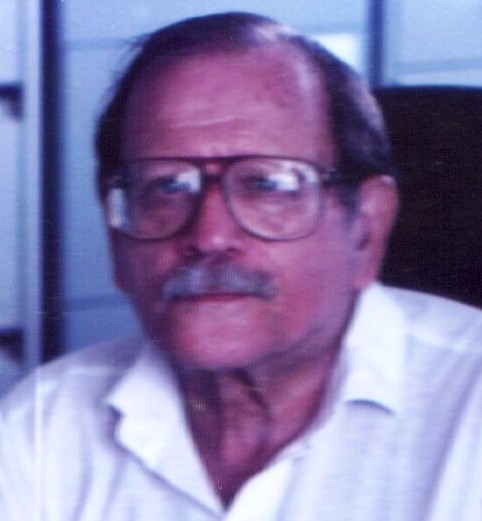
by Adrienne Hunter
Lionel Martin was born in The Bronx, New York City on April 25, 1927. His parents were children of Jewish immigrants whose families arrived from Europe in the early 20thcentury, his father’s family from Germany, his mother’s from Russia. Lionel had an older sister Natalie (Photo 1). Their father died when Lionel was only two and a half years old and his sister four.
Lionel was a restless child and his widowed mother sought help by enrolling him, at the age of nine, in The Modern School in Lakewood, New Jersey (Photo 2). As described in a school pamphlet, written by the co-owner-directors, James and Nellie Dick, Lakewood was “a co-educational school for children where the keynote of learning is the freedom of self-expression in creative activities with a social environment, developing responsibility and comradeship.” Lionel wrote in his unfinished memoirs that his years with ‘Big Jim and Nellie’ (1936-1941) played a significant role in his formation (See Chapter 2 of his Memoirs).
Lionel attended the Bronx High School of Science in New York City, and upon graduation, went west to enroll in the University of Berkeley, California. Here he completed a BA in Political Science followed by an MA in International Relations. He then started work on a Ph.D., and at the same time, began as a news commentator in California for Radio KPFA of the Pacifica Foundation. He also reported for them from the United Nations in New York (Photo 3), a clear indication of his early interest in world affairs.
Lionel long aspired to be a radio journalist; he listened avidly and with admiration to the reports by U.S. WWII correspondent Edward R. Murrow. He discovered much later in life that he and Murrow were born on the same day, some 19 years apart.
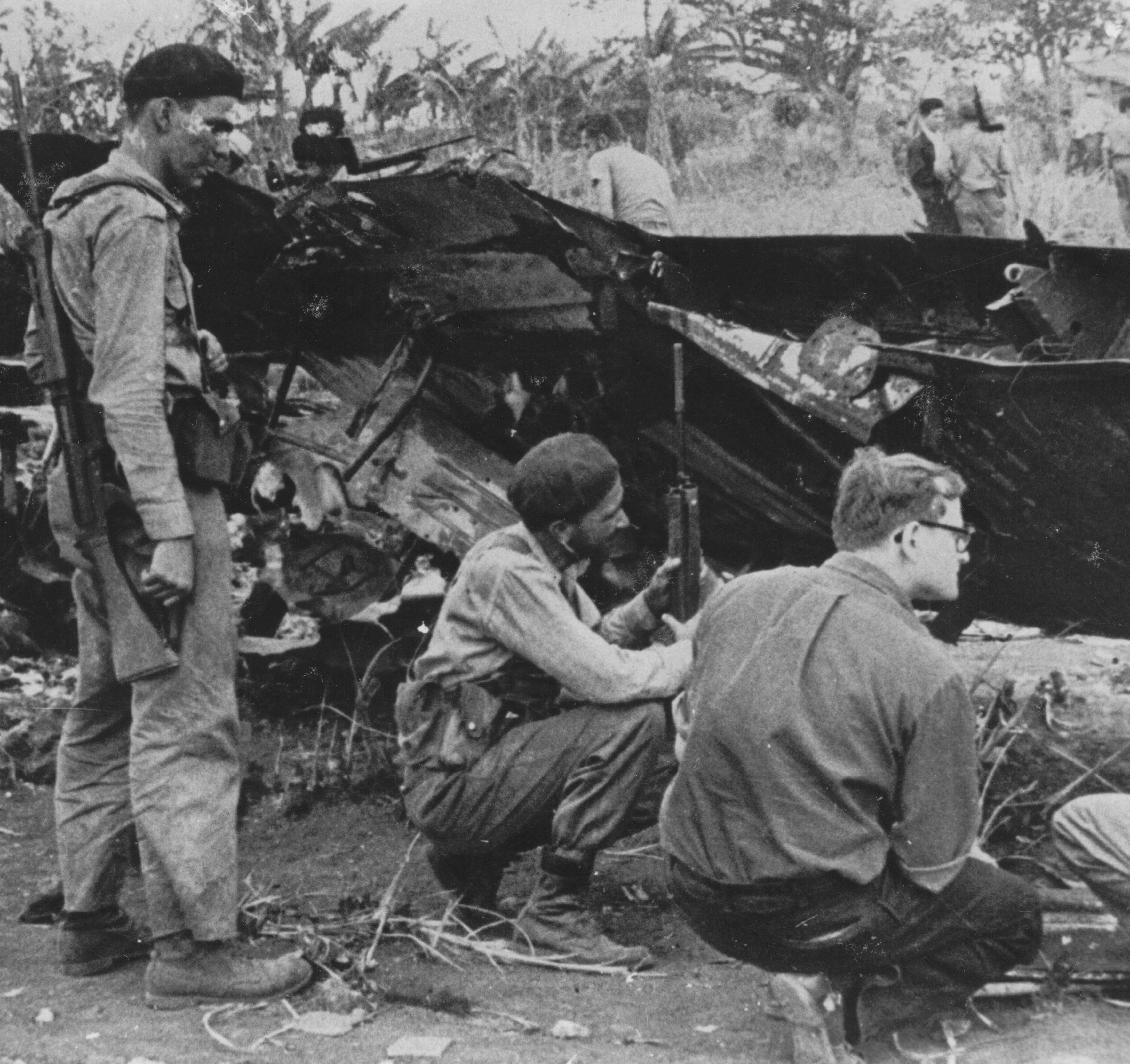
Lionel did not, however, pursue a career in journalism after graduation from university. Instead, he went to work in industry, with the Southern Pacific Railway as a journeyman mechanic, as a longshoreman on the Bay Area docks in Northern California, and with General Motors. In all these jobs he was active in union organizing. Intrigued by the social and political revolutionary process that was occurring in Cuba, Lionel, leaving his family behind, made his way to Havana in early 1961. He arrived March 15th, one month before the Bay of Pigs invasion. With accreditation from Radio KPFA he covered the fighting from the front lines (Photo 4). He then decided to stay in Cuba as a first-hand observer of the rapid changes unfolding. He would remain in Cuba until his death in 2019.
In June 1961, Lionel’s then wife Barbara and their two small children, Julie and Curtis, joined him. Then Lionel obtained a job with the Ministry of Education. This job was related to one of the most important events taking place in the country: the Literacy Campaign, from April to December 1961. (See note at the end of this Biography)
With the successful completion of the Literacy Campaign, the Ministry of Education embarked on the task of drawing up the curricula for junior and senior high school in line with the Revolution’s ideals. Lionel was appointed technical advisor on curriculum and textbooks for Social Sciences.
Lionel continued writing about the cultural and socio-economic changes taking place in the country. His articles were published by the National Guardian of New York as well as by the Cuban news agency Prensa Latina.
In 1968, Lionel left the Ministry to work full-time at Prensa Latina. At the same time, he and his wife Barbara were divorced. Four years later, his marriage to Adrienne Hunter (Photo 5), a Canadian linguist with professional connections to the Canadian Broadcasting Corporation (CBC) in Toronto led to his being interviewed by the CBC about the September 1973 coup in Chile. This resulted in his becoming a regular CBC News correspondent and, soon after, correspondent for the American Broadcasting Company (ABC). At the same time, the Reuters News Agency Havana bureau hired him to cover for their regular correspondent, a position he held for 25 years until 1998 (Photo 6). Not long after he also began reporting for the BBC of London.
Lionel’s Reuters articles were picked up and published in newspapers around the globe in many languages.
Considered by the Cubans as an honest and objective journalist, Lionel had the opportunity to meet and interview high ranking officials in the Cuban government such as Fidel Castro and Che Guevara as well as celebrities such as Prima Ballerina Alicia Alonso and writer Gabriel Garcia Marquez. (See photos in Who Was Lionel Martin on the Home Page)
Lionel was interested in music, drawing, cooking (Photo7), gardening and sports. He was also a handyman knowing a lot about plumbing, electricity and car mechanics. Gregarious and highly social, he had many friends and loved cooking meals for them, although some of his more experimental dishes were not always appreciated by others (Photo 8). Also well-known was his ability to play music by ear on such instruments as the piano, guitar (Photo 9) and harmonica. He loved baseball and was a proud fierce left-handed pitcher for a UAW (United Auto Workers) team. (Photo 10).
In addition to his journalistic work, Lionel kept busy researching and writing books. The first to be finished was a biography of Fidel Castro, The Early Fidel: Roots of Castro’s Communism, published by Lyle Stuart of New York in 1975. A Spanish edition was published in 1978 by Grijalbo in Spain as El Joven Fidel: Los origenes de su ideologia comunista. He wrote a book specifically for a Cuban readership under the pen name of Richard O’Reilly. It was published in 1984 by Ediciones Politicas of the Editorial de Ciencias Sociales in Havana: El Pueblo Negro de Estados Unidos: Raices historicas de su lucha actual. [The Black People of the USA: Historical Roots of their Present Struggle]
In 1998 Lionel retired from journalism in order to write his memoirs as well as another book about Cuba entitled The Wildest of Dreams. A severe cerebral hemorrhage suffered in late January 2001 unfortunately put an end to both these projects. Lionel was left paralyzed on the right side of his body and unable to speak. With intense physiotherapy he made remarkable progress and, within 18 months, was able to walk and engage in daily activities with the family such as drawing, playing cards (Photo 11), making music and watching films.
He particularly enjoyed drawing and eagerly produced a new drawing every day for several years (Photo 12). They were exhibited on several occasions along with corresponding wooden carvings by Cuban sculptor, Joya. (See Gallery of Drawings and Carvings)
Lionel’s ability to express through art his struggle to overcome his paralysis was not a surprise to me. At the start of our marriage some 30 years earlier, he had produced delightful drawings which reflected the ups and downs of our new life together.
In 2018, I published a little book of these drawings Life with Monsieur Pamplemousse dedicated to the grandchildren (Julie’s Nadia and Giovanni and Curtis’ Elena, Alexander, Diego and Nicolas). I hoped to provide them with a more rounded picture of their grandfather, showing that “in addition to being a journalist, historian, author, imaginative and audacious cook, musician, baseball player, and amateur Mr. Fix-It, Grandpa Lionel is also an artist.”
Lionel died on June 28, 2019, at 92.
NOTE:
1961 was named Year of Education in Cuba. In the month of April a nationwide campaign began to teach the 33% of the population who were illiterate. The teachers were volunteer young people who lived with families throughout the country where there were people who could not read or write. On Dec. 22nd the results were announced: illiteracy had been reduced from 33% to less than 2%, and Cuba was declared the first country in Latin America to be free of illiteracy; the United Nations recognized this achievement as a milestone in world education

Photo 1 Lionel with his sister and parents Harold and Jean



 Lionel Martin